
Total Solar Eclipse in Algeria, 2 August 2027 – 11 Days from Algiers to Oran
11 Days / 10 Nights
From its natural splendours to its archaeological riches
From Thursday 29 July to Sunday 08 August 2027
Algiers – Tipaza – Tlemcen – Oran – Constantine – Timgad – Biskra – Djémila – Sétif
Your ground operator in Algeria offers you: 11 Days / 10 Nights
Where and When to Watch the 2 August 2027 Eclipse in Algeria
On Monday 2 August 2027, the Moon will completely cover the Sun above Oran for more than five minutes. Algeria DMC takes you there on an 11-day cultural circuit, from the Roman ruins of Tipaza to the Saharan oases of Biskra.
Eclipse and Cultural travel program in Algeria with Algeria DMC
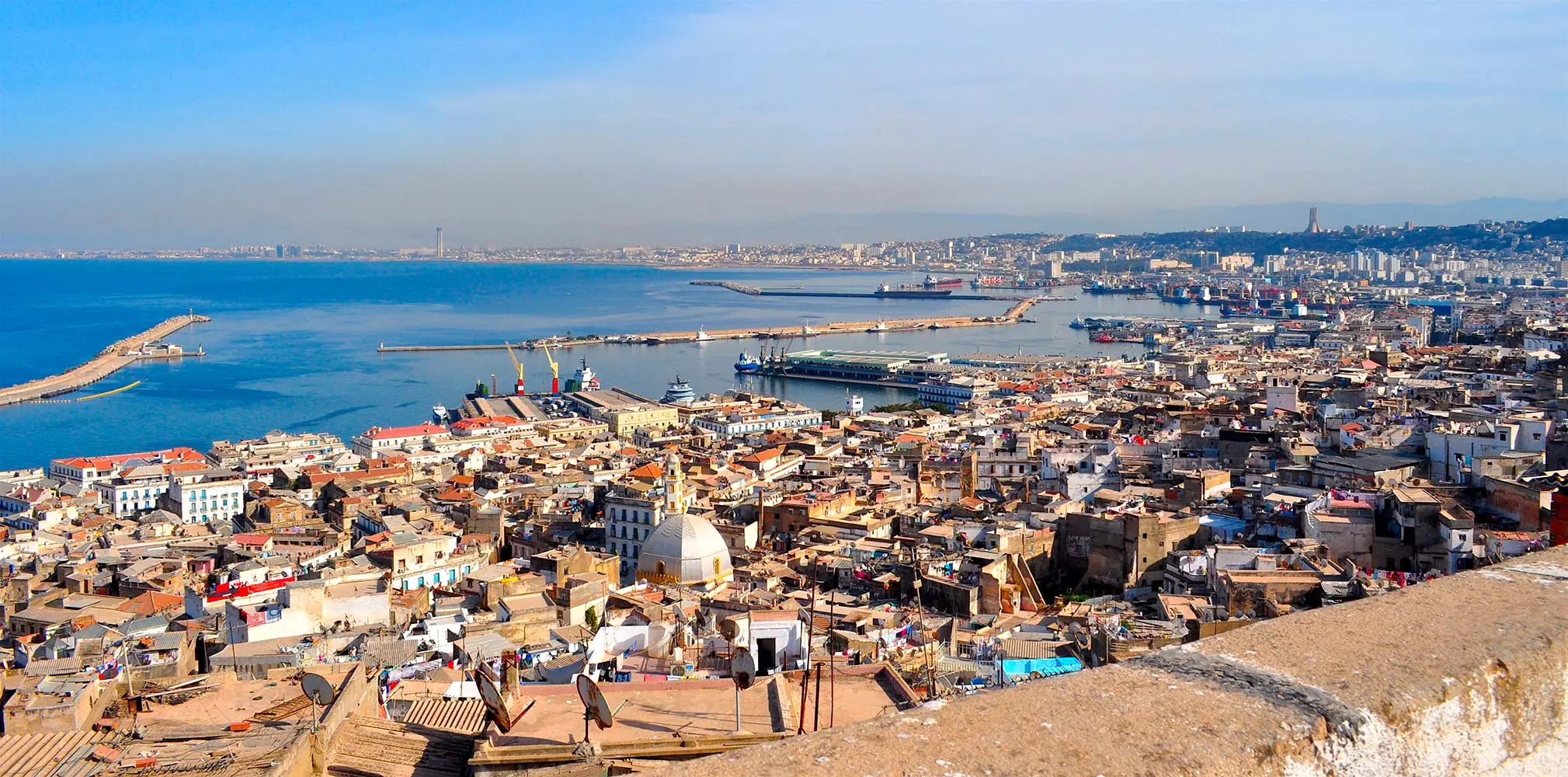
Day 1 – Thursday – ALGIERS :
Arrival at Algiers airport, assistance, and transfer to the hotel, with a stop on the heights of
the city to see the Makam Echahid (Martyrs’ Memorial). Erected in the early 1980s to
honor the Algerian fighters who fell for the country’s liberation, this monument towers 92
meters above the city.
Hotel check-in and city tour concluding with the Basilica of Notre-Dame d’Afrique, a
Romanesque-Byzantine style edifice consecrated in 1872 and situated atop a hill.
Dinner at a local restaurant and overnight stay at the hotel.
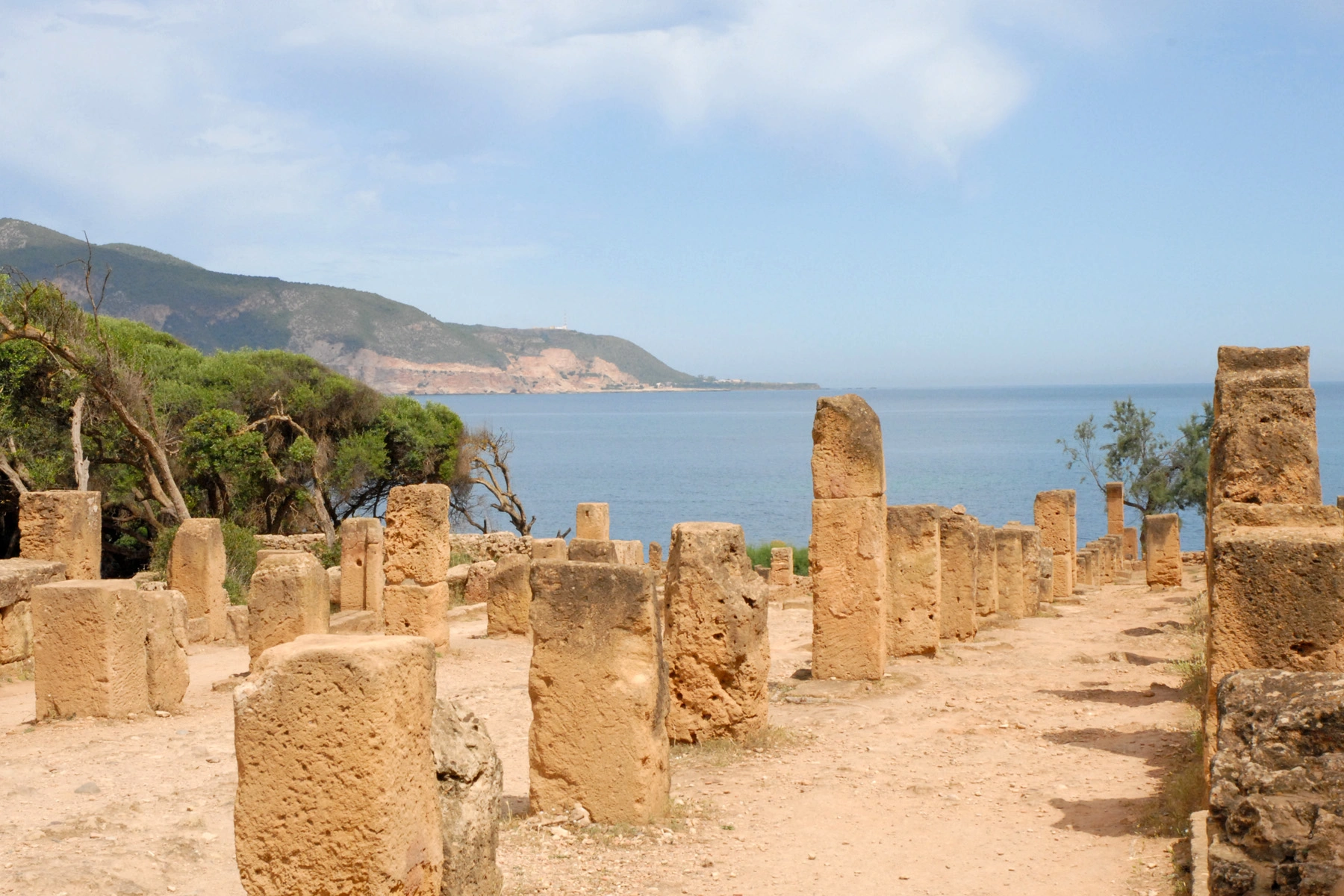
Day 2 Friday - Cherchell – Tipaza – Royal Mausoleum of Mauretania (190 km) :
Breakfast. We depart for Cherchell, formerly Caesarea and the capital of Roman
Mauretania Caesariensis, with origins dating back to the Phoenician era. We visit the archaeological ruins and the magnificent Cherchell National Public Museum. This museum houses an exceptional collection of mosaics, statues, inscriptions, and stelae one of the most prestigious in the Maghreb.
Seafood lunch.
We then continue to Tipaza, a UNESCO World Heritage site. This coastal city began as a Punic trading post, serving as a maritime stopover and a hub for trade with indigenous populations. The Roman period left behind a prestigious array of buildings featuring diverse architectural styles. From the 3rd to the 4th century AD, the remarkable rise of Christianity was reflected in a multitude of religious structures, some paved with beautiful mosaics. The Vandal invasion of the 430s did not permanently end Tipasa’s prosperity; however, although the city was reconquered by the Byzantines in 531, it began a steady decline from the 6th century onwards. We stop at the impressive Royal Mausoleum of Mauretania, often mistakenly called the « Tomb of the Christian Woman » (Tombeau de la Chretienne). Dating back to the Numidian era, it is believed by some historians to be a royal mausoleum built by King Juba II (reigned 25 BC – 23 AD) and his wife, Queen Cleopatra Selene.
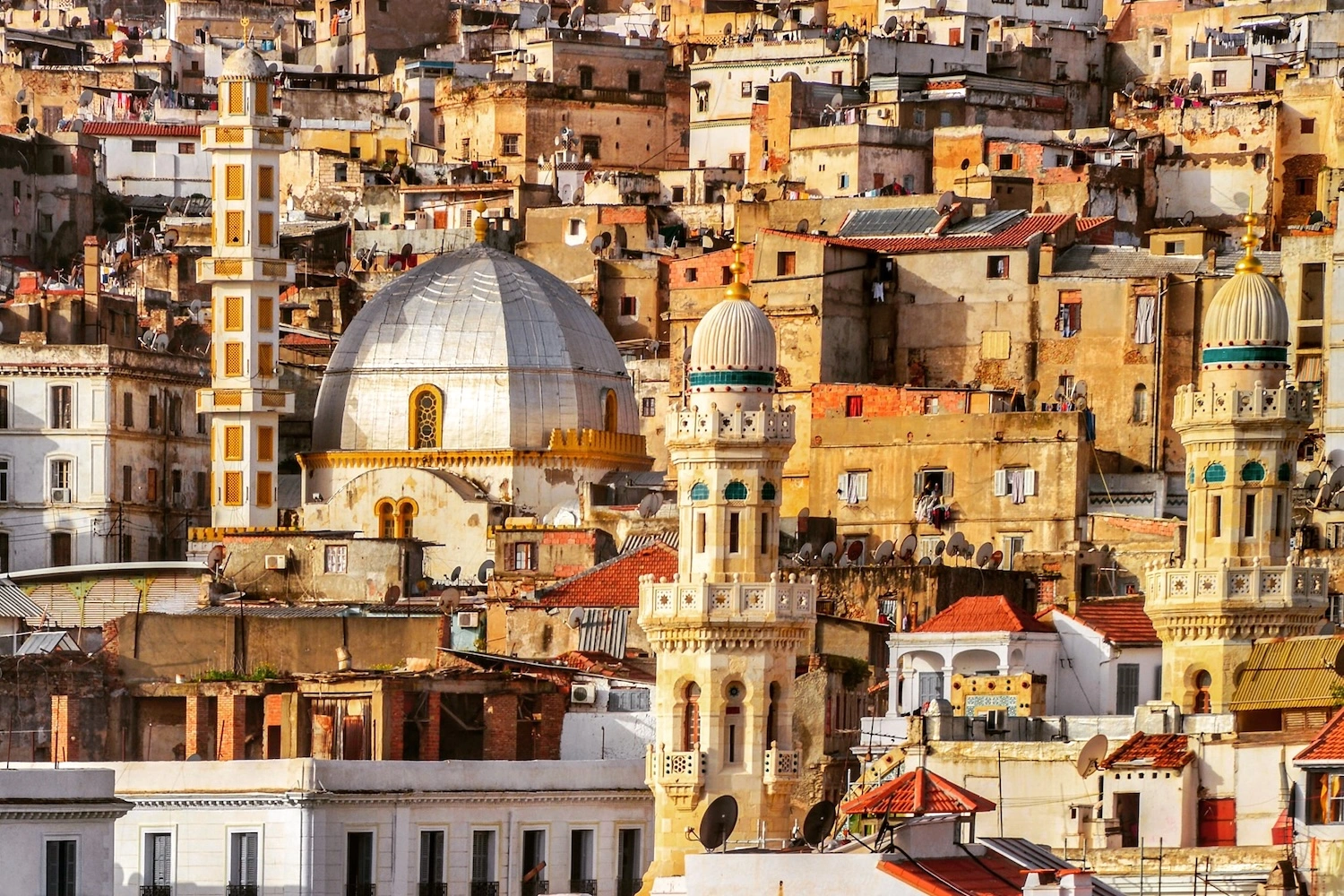
Day 3 Saturday : Tour of the Kasbah and flight to Tlemcen
We set out to explore Algiers, centering on the Casbah—the citadel of the medina. This historic district has been a UNESCO World Heritage Site since 1992. We visit the Citadel, the seat of power during the Regency of Algiers in the 18th century, as well as the « Centenary House. »
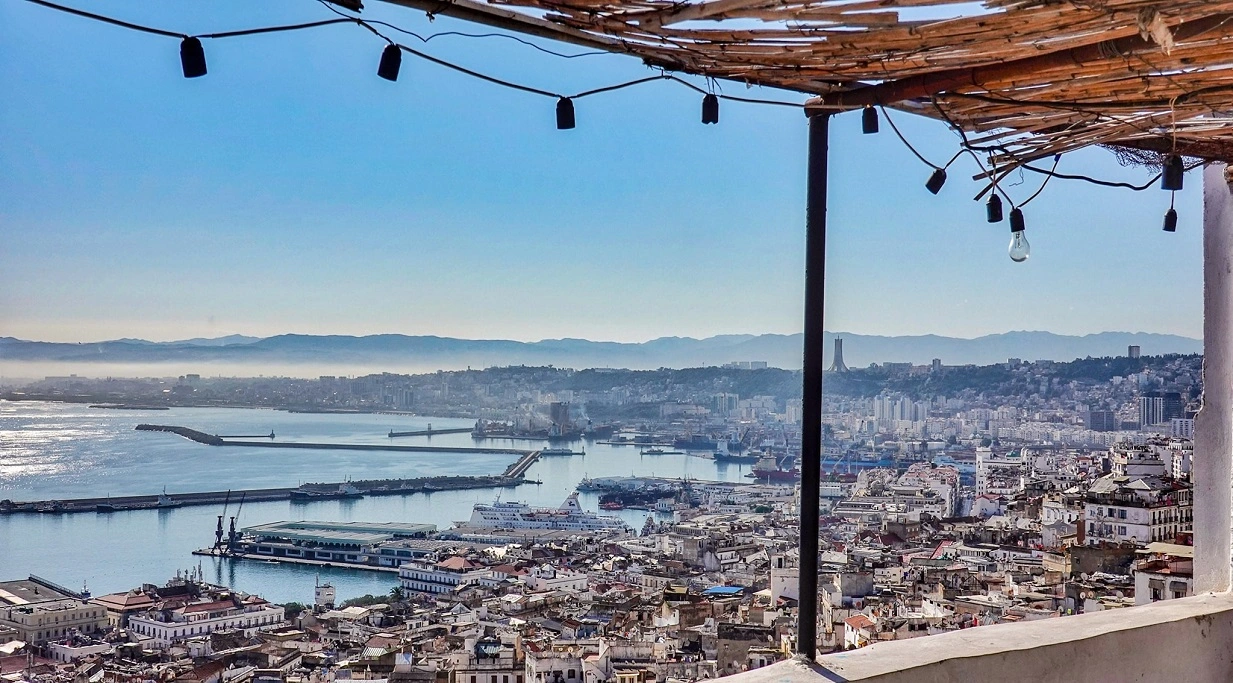
We wander through the Casbah’s maze of narrow alleyways, pausing at panoramic terraces overlooking the famous Bay of Algiers and visiting traditional houses to enjoy tea and pastries. We discover the Sidi Ramdane Mosque, Algiers’ oldest, dating back to the era of medieval Berber dynasties (10th or 11th century). Along the way, we pass the Aïn Bir Chebana fountain, which still supplies water to the Casbah. We also pass the Sidi Abderrahmane Mausoleum (17th century) and the Mustapha Pacha Palace (now the Museum of Arabic Calligraphy), dating from the late 18th century.
Lunch in a traditional house with a Casbah family.
After lunch, we set off for a tour of Algiers, discovering the seafront boulevard, a 1,500- meter-long promenade designed by architect Frédéric Chassériau. Inaugurated by Napoleon III in 1865 and lined with arcaded buildings, it is often compared to the Rue de Rivoli in Paris. In addition to a magnificent panoramic view of the bay, it offers a vantage point for viewing some of the city’s most iconic buildings. We will visit the famous Grande Poste, the Neo-Baroque National Theatre (1853), the Wilaya (Algiers prefecture), and the Galleries de France, now converted into a Museum of Modern Art.
At 4:00 PM, we head to Algiers Airport for the 5:45 PM direct flight to Tlemcen (arriving at 6:45 PM), followed by a transfer to the heights of Tlemcen on the Lalla Setti plateau, check in hotel for dinner and an overnight stay.
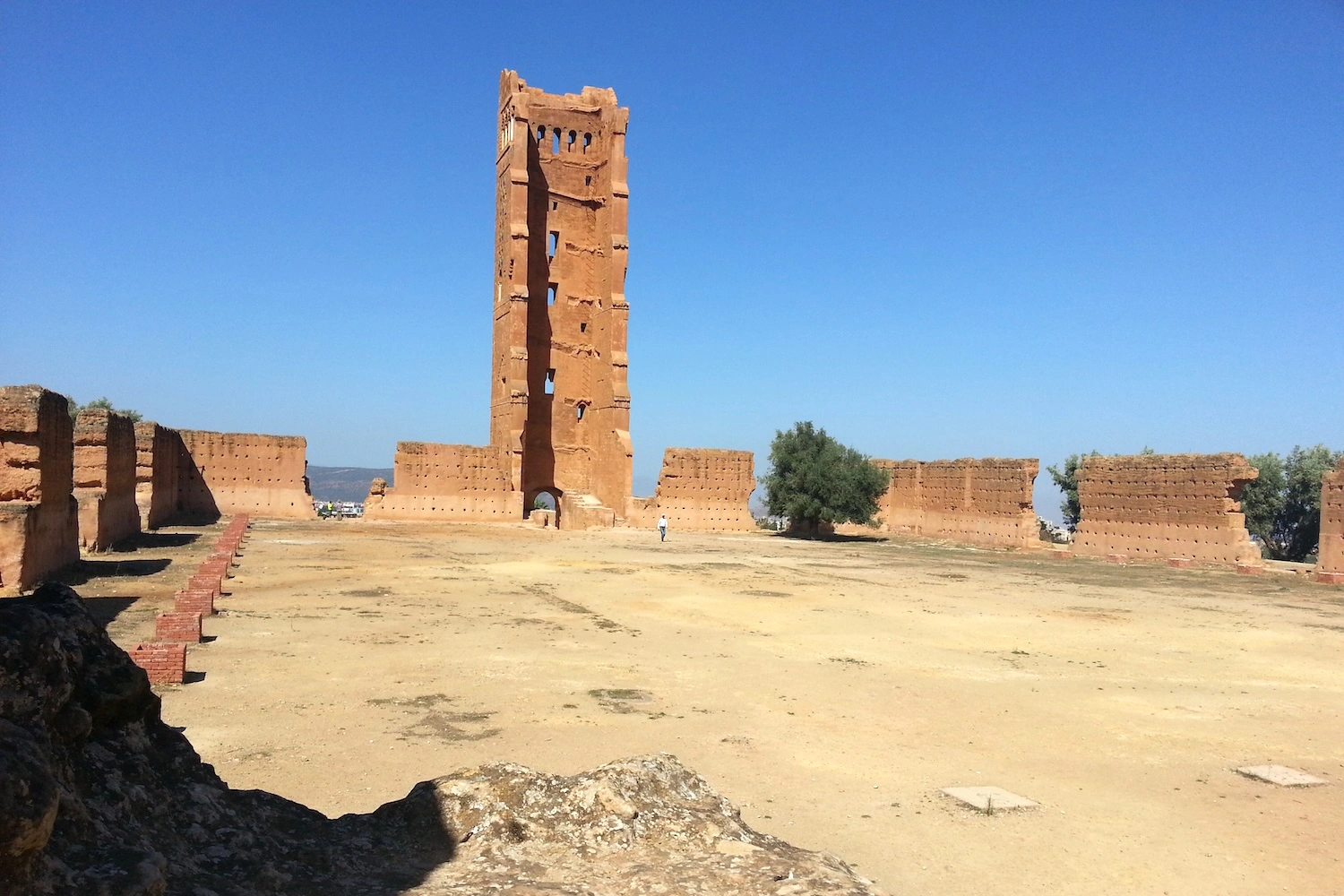
Day 4 Sunday : Tlemcen – Oran
On the morning, visit the ramparts of Mansourah, built by Sultan Abu Yaqub and the « El
Eubad » complex to explore the Madrasa and the Mausoleum of Sidi Boumediene, a Sufi
master and the city’s patron saint.
Next, visit the El Mechouar Citadel, founded in the 13th century by Yaghmoracen ibn Zyan and long the residence of the Zayyanid princes; explore the Royal Palace and its remains.
We will continue with a visit to the crafts center and the Sidi Belahcen Museum, concluding
with the Great Mosque, built in the 12th century (1136) by the Almoravid prince Ali Ben
Youssef.
Lunch in the city.
Departure for the El Ourit waterfalls, including a visit to the railway bridge designed by the
renowned engineer Gustave Eiffel, followed by a trip to Ain Fezza to explore the Beni Add
Cave, a stunning geological marvel featuring several chambers filled with stalactites and
stalagmites in a variety of beautiful shapes and formations. Carved into the limestone
massif of Ain El Fezza, this 700-meter-deep cave dates back approximately 65,000 years.
Next, travel to Oran via Rio Salado and Misserghin; hotel check-in, dinner in the city, and an
overnight stay.

Day 5 Monday: ECLIPSE of Oran
The day begins early to allow for a leisurely journey to the viewing site and time to get settled before the phenomenon begins. The eclipse starts gradually around 8:44 AM. Around 9:53 AM, Oran enters the peak phase of the eclipse. The Moon completely covers the Sun for about five minutes. Totality is the most spectacular moment, but also the briefest; in Oran, it will last just over five minutes. A scientific and emotional experience once totality ends, the eclipse continues in its partial phase until approximately 11:09 AM.
After the eclipse: exploring Oran, starting with the Fort of Santa Cruz, which overlooks the city and the bay, before descending to the Chapel of Santa Cruz, which watches over Oran.
Seafood lunch at the Pêcherie (fish market/harbor area).
Afternoon walk through the city: the Town Hall with its two lions, the Theater, the seafront, and the Karguentah Railway Station. Built in the Neo-Moorish style and designed by architect Albert Ballu, the station’s architecture incorporates symbols from the three Abrahamic religions. Its exterior resembles a mosque, with a clock tower shaped like a minaret; the grilles on the doors, windows, and the ceiling of the Qoubba (dome) feature the Star of David, while the interior ceiling paintings display Christian crosses. Next, we head to the historic center to discover Place du 1er Novembre, the theater, and the old neighborhoods. We will finish at the railway station. A stroll along the seafront offers a chance to appreciate Oran’s Mediterranean character: its architecture, cafés, public
squares, and the unique atmosphere that makes the city a major cultural destination in western Algeria.
Dinner in the city and overnight stay.
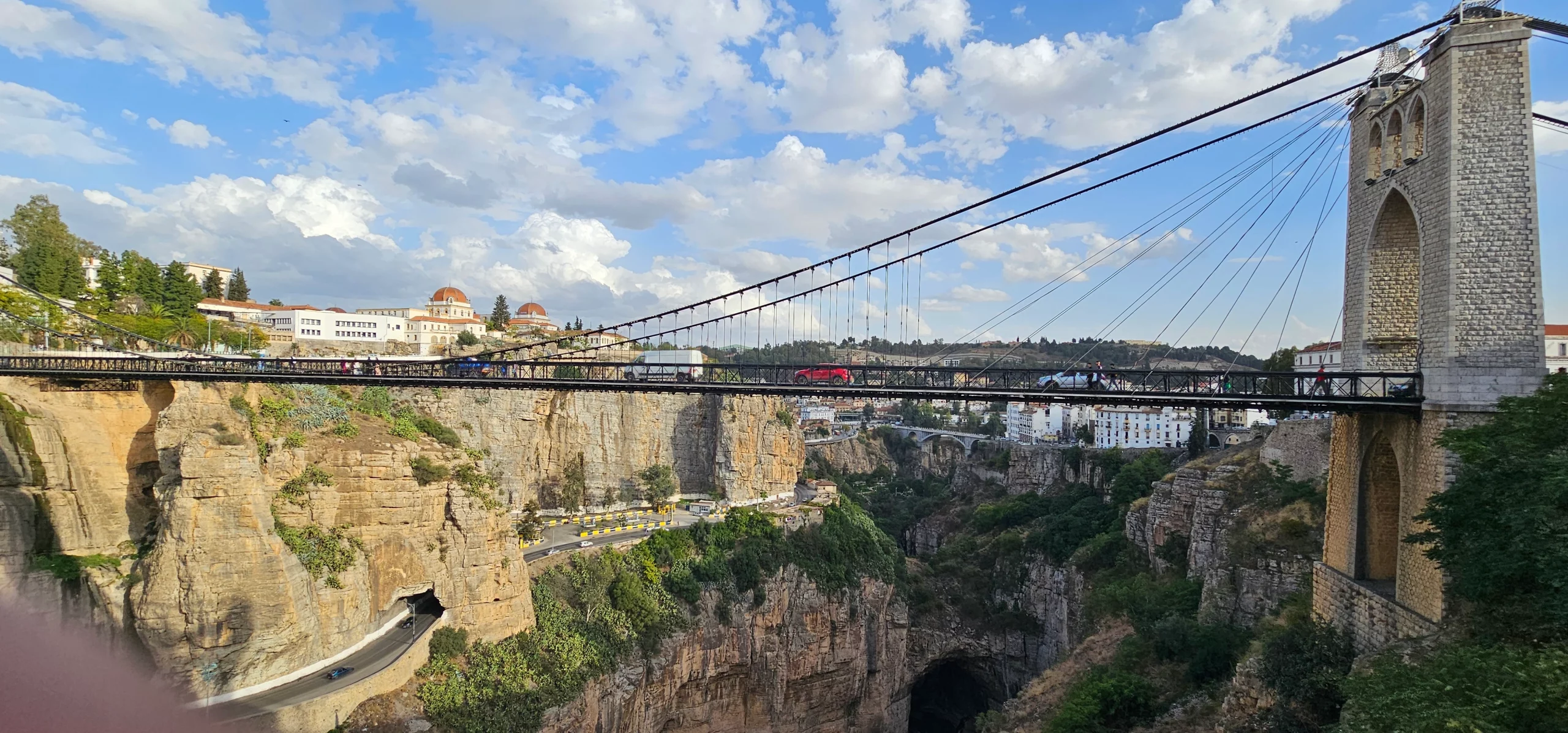
Day 6 Tuesday: Flight Oran/Constantine – Tiddis & Cirta
Early breakfast, followed by a transfer to the airport for the 09:15 flight from Oran to
Constantine (arriving at 10:55). Upon arrival, we transfer to Tiddis (or Castellum Tidditanorum), a Numidian and later Roman city that was a dependency of Cirta (modern- day Constantine). Listed as a heritage site in 1992, the location is well-preserved and features a monumental gate, a baptistery, and the mausoleum of Quintus Lollius Urbicus.
The city was also renowned for its pottery, the style of which resembles contemporary Kabyle ceramics. We return to Constantine, check into the hotel, and have lunch at a local restaurant. As the country’s third-largest city by population, Constantine sits at an altitude of 649 meters. It is
encircled by the Rhummel River, which has carved out deep gorges, giving the city a
unique geographical setting. While it takes its current name from the Roman Emperor
Constantine the Great (3rd–4th centuries), it was previously known as Cirta and served as the capital of Numidia from 300 to 46 BC. In the afternoon, we begin our tour at the Cirta National Museum; established in 1931, it houses three departments dedicated to archaeology, ethnography, and fine arts. The archaeological collection showcases the various civilizations that succeeded one another in the region: Numidian, Carthaginian, Greco-Egyptian, Roman, Christian, and Muslim. Next, we visit the Bey’s Palace, built between 1825 and 1835 for Ahmed Bey, who was forced to leave it in 1837 following the arrival of the French. We also see the Great Mosque, built in the 11th century on the site of a former church, which is the city’s oldest religious building, as well as the Constantine Regional Theatre, formerly an opera house from the French colonial era. We end the day with a walk through the narrow streets of the Old Town, a true journey into
Constantine’s long history. During our stroll, we see the famous suspension bridges
spanning the Rhummel Gorges and enjoy magnificent panoramic views from the old War Memorial. Dinner at a local restaurant and overnight stay at the Protea Hotel.
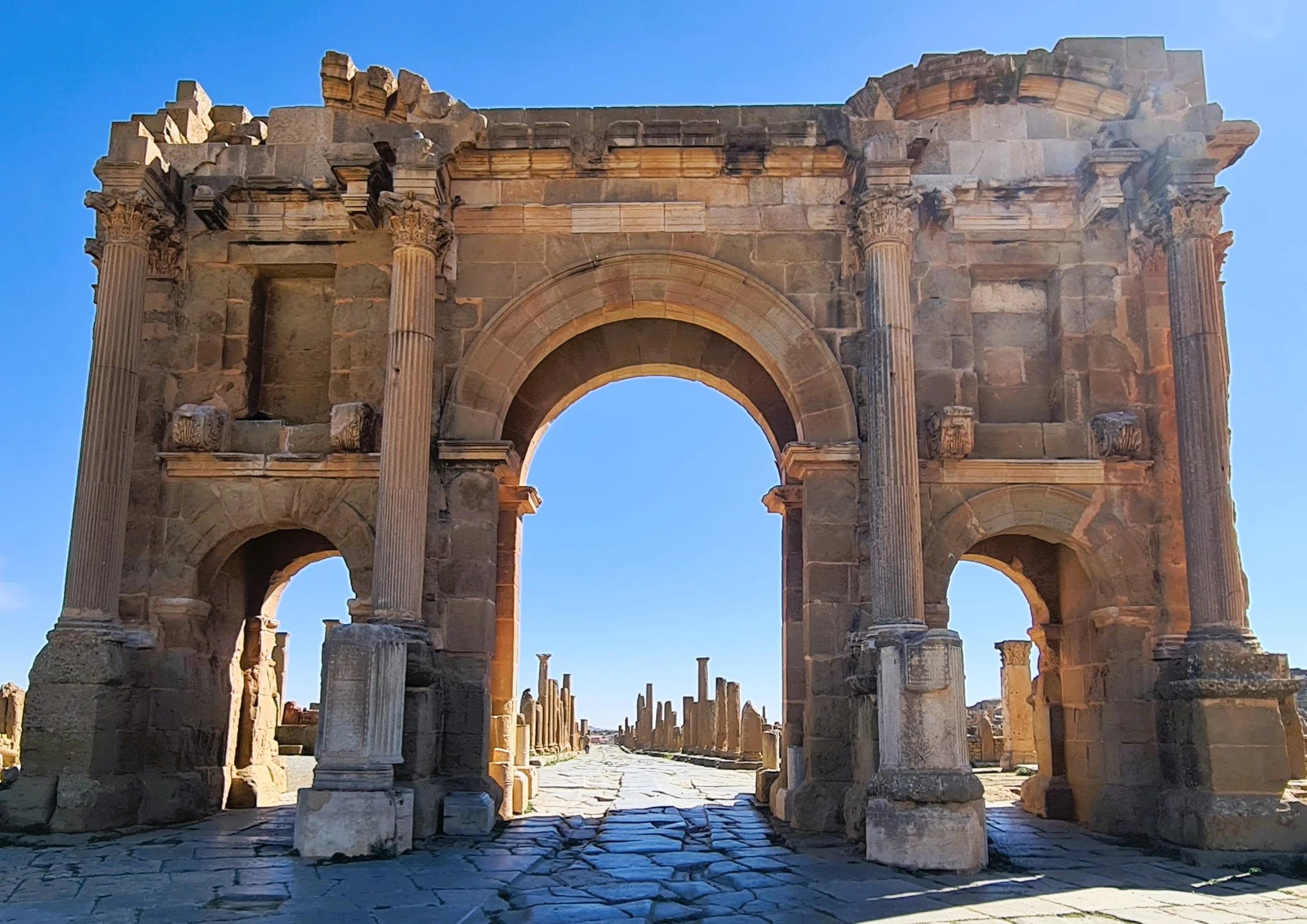
Day 7 Wednesday: Grand Chott - Medracen – Timgad - Batna
Breakfast. We leave the « City of Bridges » for an excursion heading south. Our first stop of the day is the Chott Tinsilt salt flats. We then continue to Medracen to visit the Numidian mausoleum /tumulus dating back to the 3rd century BC.
Arrival in Timgad for lunch.
In the afternoon, we visit the city of Timgad. Built under Emperor Trajan as a defensive
stronghold, situated at the gateway to the Sahara and in the heart of the Aurès mountains, it served to guard against Berber incursions. Located on a strategic route that controlled key passages across North Africa, Timgad (known as Thamugadi in Roman times) was successively conquered by the Vandals, the Moors, the Byzantines, and the Arabs. Known as the « Pompeii of Africa, » the city owes this nickname to its remarkable state of preservation; alongside Pompeii, it is one of only two Roman cities that remain virtually intact. During our tour, we view the Arch of Trajan, walk along the Cardo Maximus and Decumanus, cross the Forum, and pass by temples, markets, houses, and libraries.
In the late afternoon, we head to Batna for dinner and an overnight stay at the hotel.
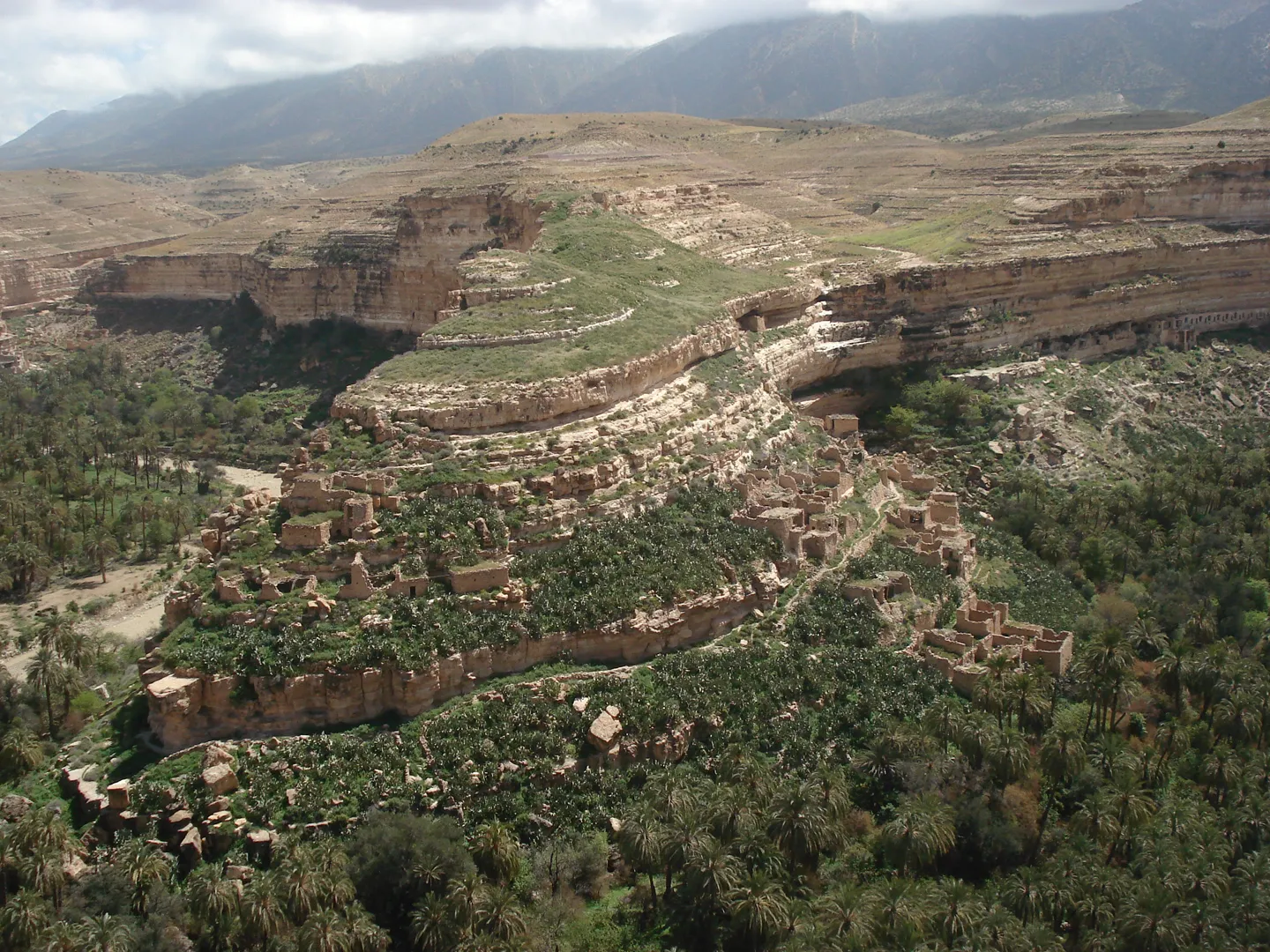
Day 8 Thursday: Aures – Canyon of Ghoufi – Biskra
After breakfast, we set off for the Aurès Mountains and the Ghoufi Balconies, an
impressive canyon featuring the ruins of an abandoned ancient Berber village set amidst a spectacular landscape.
We then head south, traversing the wild and fascinating scenery of the Aurès massif.
The landscape gradually shifts, giving way to oases and palm groves.
We arrive in Biskra, known as the « Gateway to the Desert » and a major trading hub since ancient times.
We check into our hotel.
In the afternoon, we visit the oasis and the traditional market, then head to the Tolga palm grove. There, we discover a vast, lush oasis renowned for cultivating the famous Deglet Nour dates and for its traditional irrigation system (simplified foggaras). A meeting with a local producer is scheduled.
Dinner in town to sample the local cuisine, and overnight at the hotel.
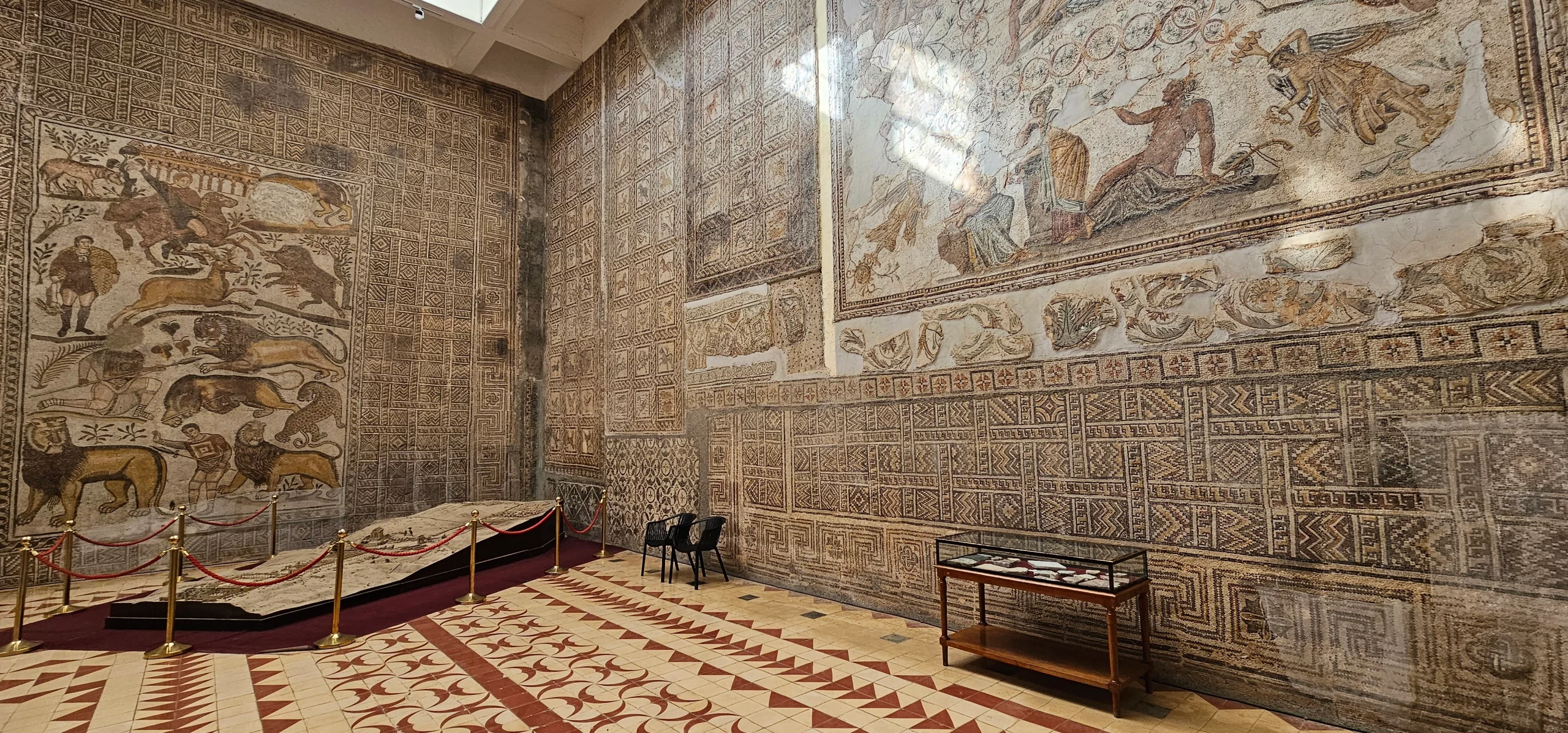
Day 9 Friday : El Kantara – Djémila – Sétif
Early morning departure from Biskra after breakfast.
En route, we will stop to admire the El Kantara Bridge. Known as the « Roman Bridge, » it is situated in a spectacular natural setting at the foot of the El Kantara Gorges — a true gateway between the High Plateaus and the Sahara. « El Kantara » literally means « the bridge » in Arabic, reflecting the importance of this natural passage.
Arrival in Djémila around 1:00 PM for lunch at a small local restaurant.
A UNESCO World Heritage site situated at an altitude of 900 meters, ancient Cuicul with its forum, temples, basilicas, triumphal arches, and houses stands as a remarkable example of Roman urban planning adapted to a mountainous setting. Cuicul represents one of the finest ensembles of Roman ruins in the world. Founded by veterans under Emperor Nerva (late 1st century), the city expanded and was embellished during the reigns of the Antonine and Severan dynasties; in Late Antiquity, a Christian quarter featuring a basilica and baptistery was added. During our tour of the ancient city, we discover among other landmarks the Arch of Caracalla, the Great Baths of Commodus, the forum, the macellum, and the Temple of Venus Genetrix. Before leaving this magnificent site, we visit
its museum, which houses the treasures unearthed there, including a unique collection of mosaics remarkable for the freshness of their colors.
We then continue to Sétif and check into our hotel. Afterward, we take a walk through the city, with its broad shopping avenues, passing the famous « Aïn El Fouara » fountain a symbol of the city along the way.
Dinner at a local restaurant and overnight stay at the hotel.
Day 10 Saturday: Sétif – Garden Essai - Algiers
Morning visit to the Sétif National Public Museum, a journey through Algeria’s history. The Sétif National Public Museum is a must-visit destination for discovering the history and heritage of the Sétif region. The museum houses a collection that includes archaeological artifacts, sculptures, inscriptions, and coins, testaments to the region’s rich history as well as magnificent mosaics.
Afterward, depart for Algiers via the highway, with lunch en route.
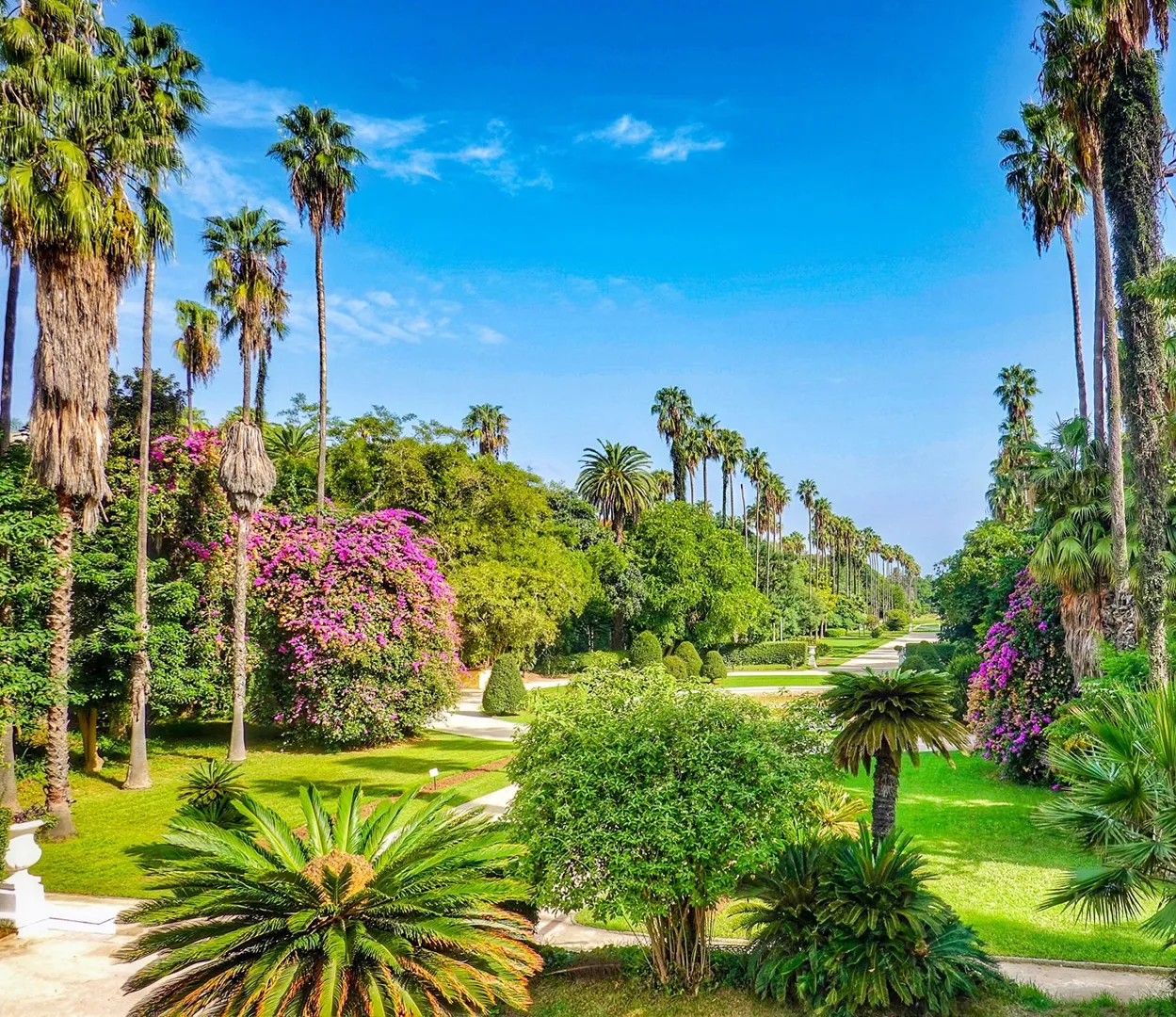
Arrive in Algiers around 3:00 PM and stop at the Jardin d’Essai to refresh and relax amidst the English and French gardens.
In the evening, enjoy a delicious dinner in the city to wrap up the tour!
Day 11 Sunday: Algiers & Flight return
Free morning for rest or shopping, followed by an airport transfer and return flight.
Program of your cultural trip to Algeria :
The itinerary may be subject to adjustments depending on airline schedules.
Notes with our ground operator in Algeria, Algeria DMC :
This tour in Algeria is confirmed with a minimum of 2 participants and accommodates up to 14 people.
All our tours can be customized or privatized upon request.
Possibility to extend your stay in Algiers or to combine this itinerary with another tour.
Highlights of this Cultural Eclipse Circuit in Algeria
- Four UNESCO World Heritage sites in one trip: Tipaza, the Casbah of Algiers, Djémila and Timgad.
- Timgad, the "Pompeii of Africa" one of only two Roman cities to survive virtually intact.
- Landscapes from the Mediterranean coast to the Aurès canyons and the Saharan palm groves of Biskra.
- Lunch with a family in the Casbah, tea in traditional houses, and a meeting with a date grower.
On August 2, 2027, Algeria will play host to a celestial spectacle of rare beauty: a total solar eclipse.
For a few moments, the Moon will pass between the Earth and the Sun, bathing the landscape in twilight.
This extraordinary event will offer travelers a unique experience, blending astronomy, nature, and discovery.
From the shores of the Mediterranean to the vast landscapes of the South, Algeria will provide a spectacular backdrop for this celestial encounter.
Yet, this journey will also be an opportunity to discover an Algeria rich in millennia of history and civilizations. Mediterranean cities, Roman ruins, mountains, oases, and vast Saharan expanses will come together to form an exceptional itinerary.
The eclipse will thus serve as the central theme of a journey combining heritage, culture, landscapes, and emotion. For astronomy enthusiasts and travelers alike all seeking a rare experience, this event promises to be unforgettable. On August 2, 2027, in Algeria, sky and earth will meet to create a truly unforgettable spectacle.
The price per person for this cultural trip to Algeria includes:
2 nights hotel Ralph 4* Algiers
Saturday Flight Algiers 17h45 Tlemcen 18h45
– 1 night hotel Renaissance 5* Tlemcen
– 2 nights hotel Royal 5* Oran
Tuesday Flight Oran 09h15 Constantine 10h55
– 1 night hotel Protéa 4* Constantine
– 1 night hotel Messaoudi 4* Batna
– 1 night hotel Nail 4* Biskra
– 1 night hotel Park Mall 4* Sétif
– 1 night hotel Lamaraz 4* Algiers
– Full board (dinners outside the hotels)
– Comfortable bus + Driver + Wi-Fi
– English, Italian, Spanish and German-speaking tour
guide for 11 days
– Guides at each site and museum
– 2 bottles of water/day/person
– Airport/hotel/airport transfers
Price per person does not include:
- International flights
- Comprehensive cancellation and repatriation insurance
- Drinks, extras, and personal expenses
- Visa fees: €110 (current rate)
- Single supplement
- Please contact us by email at algeria.dmc@gmail.com to obtain the itinerary and rates
Contact your travel agency for Algeria :
Please contact us to receive a personalized quotation based on your request.
Email us : algeria.dmc@gmail.com
Call us :+33 6 15 32 59 16
FREQUENTLY ASKED QUESTIONS : TOTAL
SOLAR ECLIPSE IN ALGERIA, 2 AUGUST 2027
When exactly is the total solar eclipse in Algeria?
The total solar eclipse takes place on Monday 2 August 2027. In Oran, the partial phase begins at 8:44
a.m. local time, totality occurs at 9:53 a.m., and the eclipse ends at 11:09 a.m. All times are Algeria local
time (UTC+1).
How long will totality last in Oran?
Totality lasts 5 minutes and 8 seconds in Oran. That is exceptionally long: most total solar eclipses last
two to three minutes. The 2027 eclipse is the longest visible from land until 2114.
Where is the best place to watch the 2027 eclipse in Algeria?
The path of totality crosses northern Algeria from west to east. Oran, on the Mediterranean coast,
combines a long totality, easy access by air, hotel capacity and a wide open horizon over the bay. Our
observation site is chosen inside the path, away from city lights and crowds.
Why choose Algeria rather than Spain, Morocco or Egypt?
Spain offers a shorter totality near the northern limit of the path. Egypt offers the longest totality but
very high summer heat. Algeria sits in between: over five minutes of totality, mild coastal temperatures
in Oran, and four UNESCO World Heritage sites within the same trip. It is also far less crowded than
Spain, where millions of visitors are expected.
What is the weather like in Oran in early August?
Early August in Oran is dry and sunny, with average daytime temperatures around 30 °C and very little
rainfall. Morning cloudiness on the Algerian coast is generally subdued at the time of day when the
eclipse occurs. No location can be guaranteed cloud-free, which is why our programme keeps flexibility
on eclipse morning to move to a clearer site if needed.
Do I need a visa to travel to Algeria?
Yes. Most nationalities, including EU, UK, US, Canadian and Australian citizens, need a visa obtained
before departure. Visas are not issued on arrival at Algerian airports. As a licensed local agency we provide the hotel vouchers and invitation letter required for your application. Allow one to four weeks
for processing. Visa fees are paid by the traveller and are not included in the tour price. Full details on our Visa for Algeria page.
Is it safe to travel in Algeria?
The regions covered by this itinerary – Algiers, Oran, Tlemcen, Constantine, Batna, Biskra and Sétif –
are visited by tourists year-round. You travel with a licensed Algerian operator, an English-speaking
guide throughout, and private transport. We follow official recommendations for each area and adapt the
route if needed.
Do I need special equipment to watch the eclipse?
Certified eclipse glasses meeting the ISO 12312-2 standard are essential for the partial phases. During
the few minutes of totality itself, and only then, the eclipse can be watched with the naked eye.
Binoculars and cameras require certified solar filters until totality begins.
What else will I see besides the eclipse?
The eclipse is one day of an eleven-day cultural circuit. You will visit four UNESCO World Heritage
sites – the Roman city of Tipaza, the Casbah of Algiers, Timgad and Djémila – as well as Tlemcen,
Constantine and its bridges, the Ghoufi Canyon in the Aurès Mountains and the date palm oases of
Biskra.
How large is the group and when should I book?
The group runs with a minimum of 2 and a maximum of 14 travellers. Demand for the 2027 eclipse is exceptional and hotel and flight capacity in Oran is limited for that week, so we recommend booking at least twelve months ahead. A deposit of 30% confirms your place; the balance is due 60 days before departure.
Ready to book your cultural journey in Algeria now?
Contact our ground operator : algeria.dmc@gmail.com